


Emma & James
About your engagement ring
25/02/2024


14K White gold scattered blooms undulated diamond engagement ring
James Allen


About your Diamond

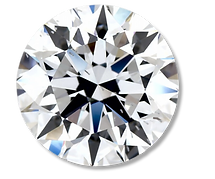
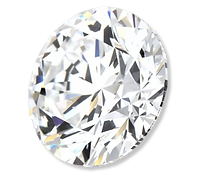


1.3 Carat lab grown diamond
Cut round brilliant
Colour D
Clarity SI 1
Cut Grade Ideal
The 4 C's of Diamonds
Cut Colour Clarity Carat

Cut - Your Diamond is Ideal
The cut of a diamond not only refers to the diamond’s shape, it also refers to how effectively the diamond returns light back to the viewer’s eye. A well-cut diamond will appear very brilliant and fiery, while a poorly cut diamond can appear dark and lifeless, regardless of its color or clarity.
Not only do well-cut diamonds appear more brilliant, they also tend to appear larger than other diamonds of the same carat weight. An "ideal" diamond has both increased brilliance and diameter relative to more deeply-cut diamonds.
Ideal cut diamonds
An Ideal Cut Diamond is a round, brilliant, or princess cut diamond that is cut to ideal proportions and angles, and has excellent polish and symmetry ratings. An Ideal Cut Diamond is perfectly proportioned to refract light, producing that fire and brilliance up through to the table and crown

Colour - Your Diamond is D
When shopping for a diamond, it is generally preferred to choose a stone with the least amount of colour possible. Diamond colour is graded on a scale from D-Z and is divided into five broad categories (colourless, near colourless, faint, very light and light). Diamonds come in all colours of the spectrum. The predominant colour you see in a diamond is yellow, which is caused by the trace element nitrogen.
Generally, when comparing colour between two diamonds, the diamonds need to be at least two colour grades apart to even begin to see a difference. As you can see from the images below, when diamonds are in the face up position it is almost impossible to see any colour. When viewing the diamond from the side profile, you may start to detect some colour; however, diamonds are admired for their beauty from the face up position and not the side.
Diamonds in the colourless range (D-F)
Diamonds within the colourless range are the most rare and valuable of all those on the colour scale. D/E colour stones display virtually no colour, whereas F coloured diamonds will display a nearly undetected amount of colour when viewed face down by a gemologist. Yours is D... Just sayin.

Clarity - Your Diamond is SI 1
It is important to select a diamond that has minimal visible inclusions that will affect the overall beauty and durability of the diamond. If you want to be 100% sure that your diamond will be completely clean of "eye-visible" inclusions, choosing diamonds of SI quality can be very rewarding. This will ensure you receive a diamond that does not have any inclusions visible to the naked eye.
It is also a good idea to balance the clarity grade of your diamond with the colour. If you are looking at diamonds in the D-F colour range, focus on clarity grades of SI or higher. Diamonds in the G-I colour range combined with SI clarity are excellent values.

Carat - Your Diamond is 1.3 carat
Carat is a term that refers to the weight of a diamond. Prior to the twentieth century, diamonds were measured using carob seeds, which were small and uniform and served as a perfect counter weight to the diamond. The word "carob” is the origin of the word "carat" that we use today.
The size of a diamond is proportional to its carat weight. When rough diamonds are cut and polished into finished diamonds, up to 2/3 of the total carat weight may be lost. Since larger rough gems of high quality are found less frequently than smaller rough gems of high quality, a single two carat diamond will be more expensive than two one-carat diamonds of the same quality.
In the United States, the majority of diamonds used in jewelry and sold as loose diamonds are one carat or less in weight. The average engagement ring diamond sold in the U.S. is less than 1/2 carat in weight.
A diamond will increase in weight much faster than it increases in actual "face-up" diameter. For example, while an ideal cut one-carat diamond measures approximately 6.5mm in width, a diamond of twice its weight measures only 8.2mm wide—less than a 30% increase.


Waiting for you at home...
unboxing


